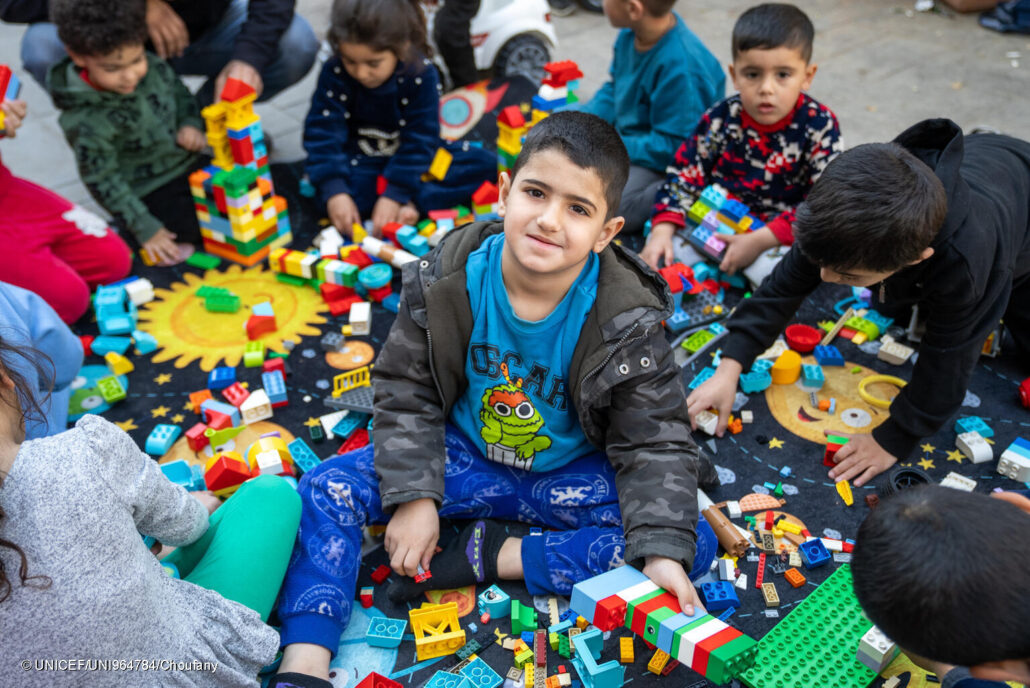
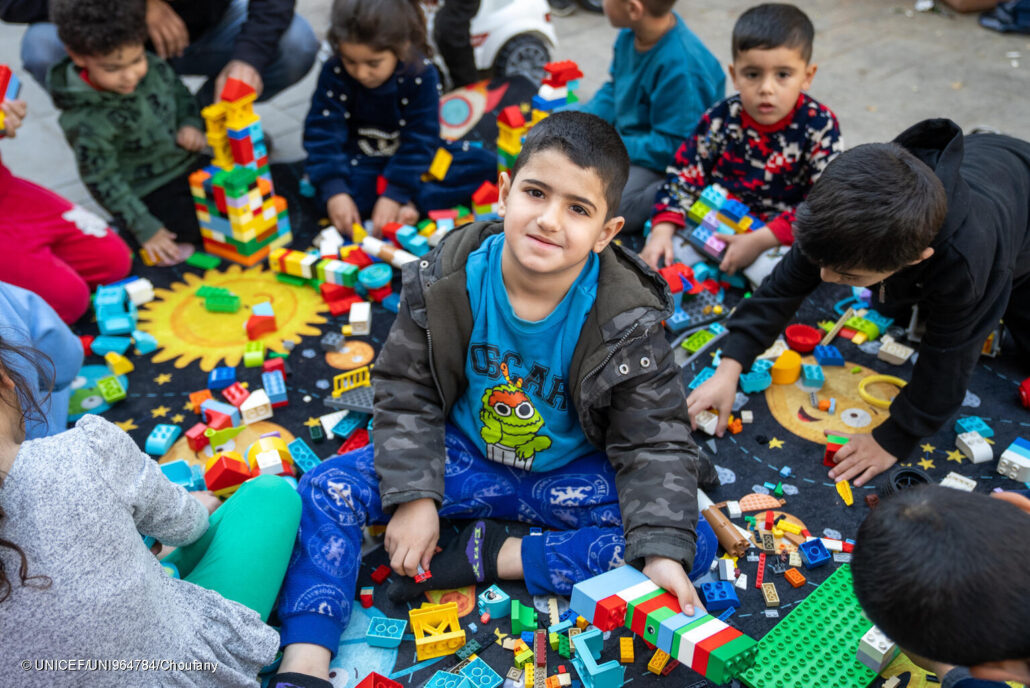
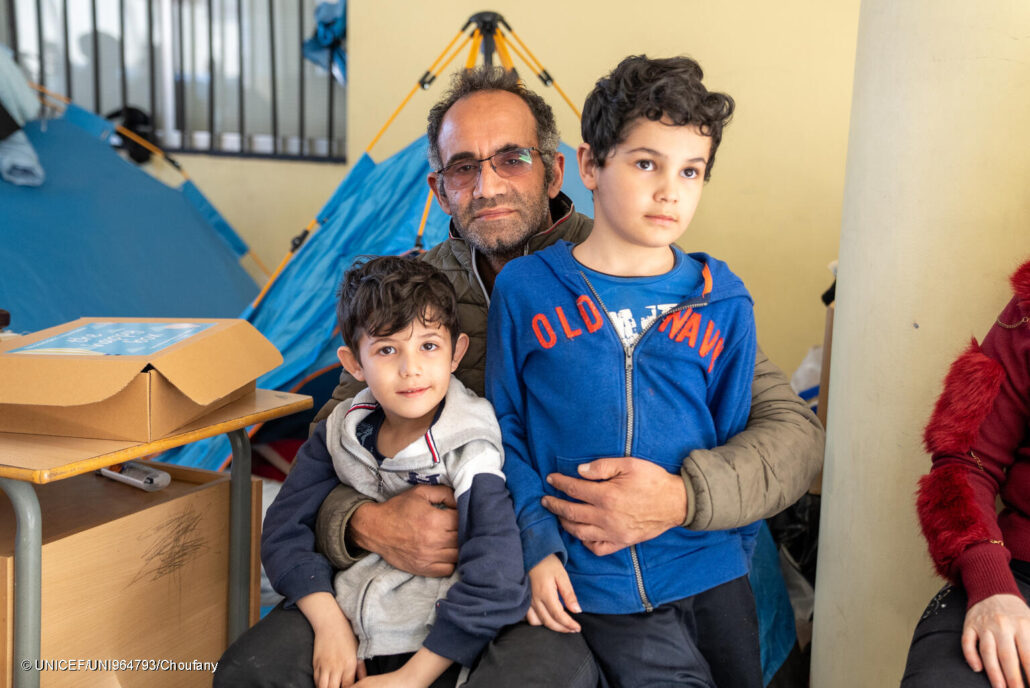
On 17 March 2026 in Lebanon, Amire, 10, looks at the camera while playing with toys at Omar Faroukh school in Beirut, where hundreds of internally displaced people are currently staying after fleeing violence.
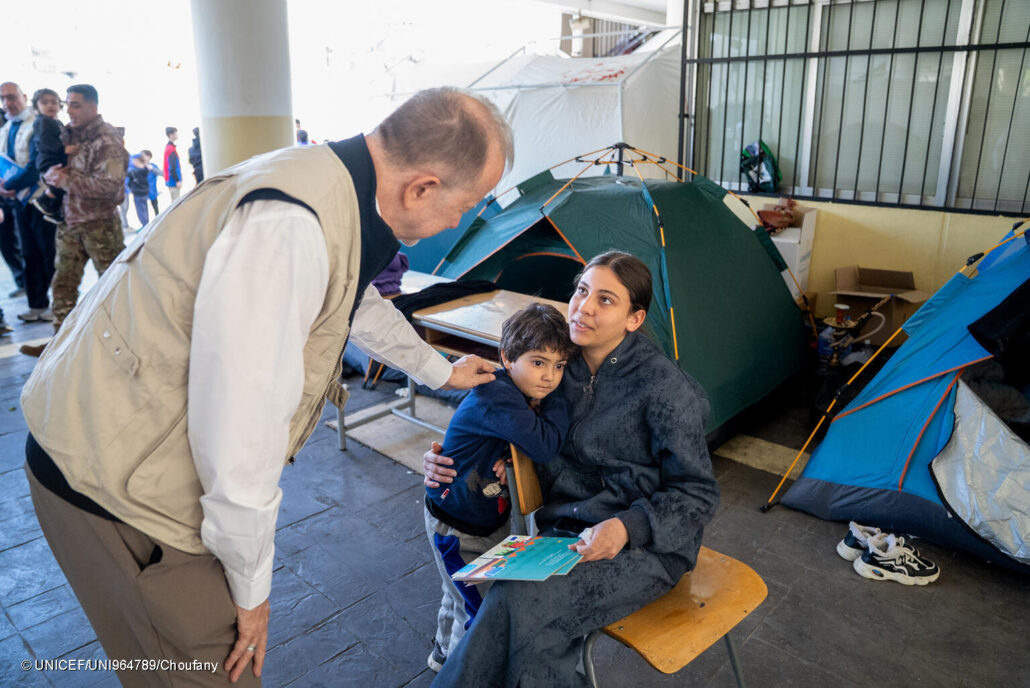
Ted Chaiban, UNICEF Deputy Executive Director for Humanitarian Action and Supply Operations, visited the site, where UNICEF is supporting families with essential supplies, nutrition services, water and activities for children.
Nearly 831,000 people in Lebanon have been forced out of their homes by the conflict, including approximately 290,000 children. Many families are seeking shelter in public buildings, including schools. Others are sleeping in cars or on the streets. Urgent shortages of water, mattresses, blankets and diesel have been reported, and the number of displaced people continues to increase by the hour.
Across Lebanon, UNICEF is working with partners to provide child protection and mental health and psychosocial support for children in shelters and affected communities; support water, sanitation and hygiene (WASH) services across multiple shelters, including repairs and upgrades to critical water and wastewater facilities; equip health facilities with essential medical supplies and expanding mobile health services to reach displaced populations; preposition nutrition supplies; support online learning platforms and distribute educational materials to children in collective shelters and establish temporary learning spaces.